
Gum disease is treatable — the earlier the better
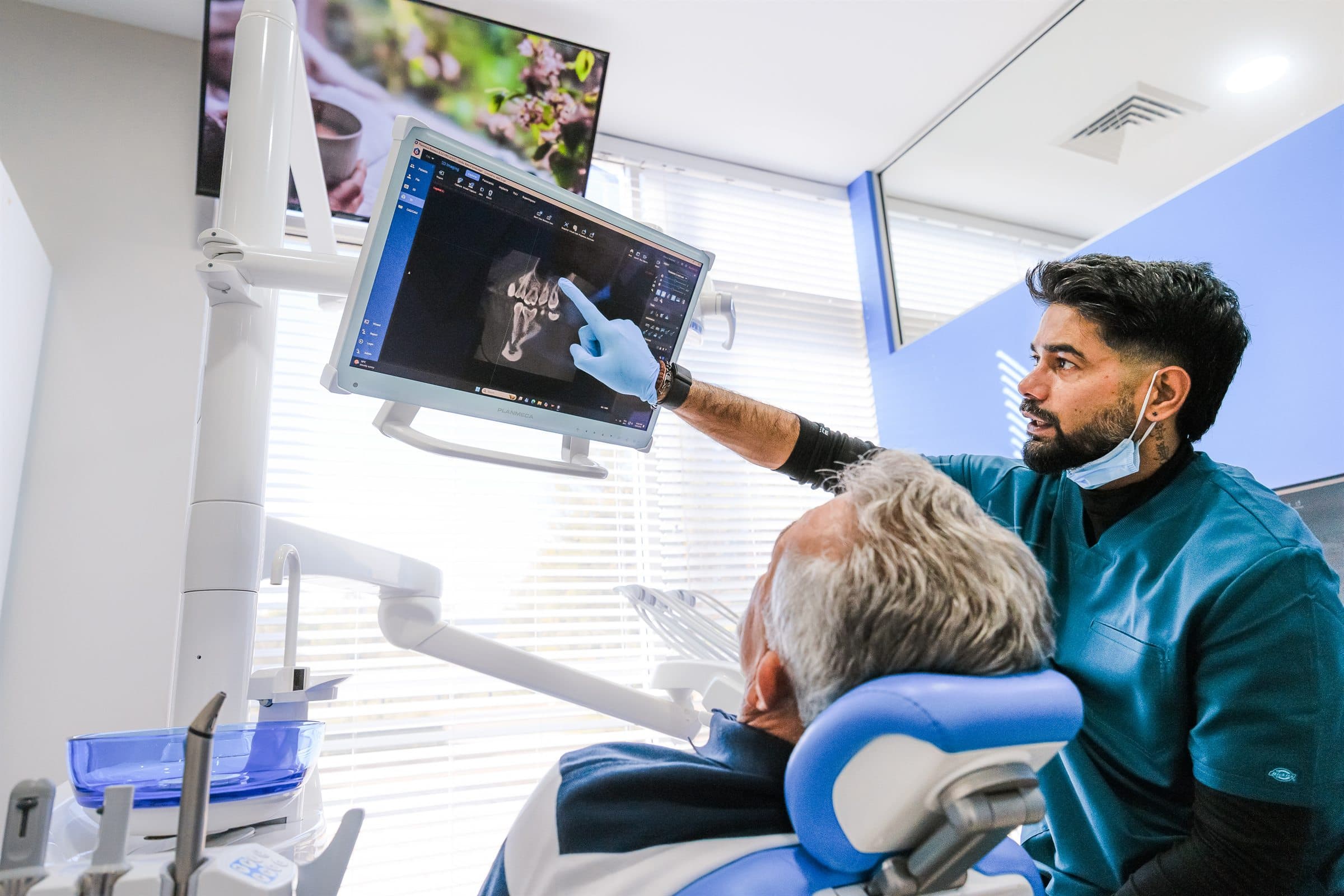
Periodontal disease affects approximately 30% of Australian adults over 35 (AIHW 2024). Most gum disease is first identified during a routine check-up. Our dentists assess the health of your gums using periodontal charting and radiographic evaluation, explain our findings clearly, and outline a management plan — before the condition has a chance to progress.
Gingivitis vs periodontitis
Gum disease — clinically termed periodontal disease — describes a spectrum of inflammatory conditions affecting the gingiva and the supporting structures (periodontium) of the teeth. According to the Australian Institute of Health and Welfare, approximately 22.9% of Australians have moderate to severe periodontitis. Early-stage disease (gingivitis) is generally reversible with professional debridement and improved oral hygiene. Advanced disease (periodontitis) involves destruction of the alveolar bone and periodontal ligament, and while not fully reversible, it can often be managed to slow or halt progression.
Gingivitis
Early, reversible inflammation
Gingivitis is inflammation of the gingival tissue caused by bacterial plaque biofilm that has not been adequately disrupted. Gums may appear erythematous (red) or oedematous (swollen) and bleed readily during brushing or interdental cleaning. According to the AIHW, gingivitis affects a substantial proportion of the Australian population, yet many individuals are unaware they have it because early symptoms can be subtle. At this stage, the underlying alveolar bone and connective tissue attachment are not yet affected. With professional scaling and improved daily oral hygiene, gingivitis is generally reversible.
Periodontitis
Advanced disease involving bone
If gingivitis is not managed, the infection can extend subgingivally (below the gumline) and begin to destroy the alveolar bone and connective tissue (periodontal ligament) that anchor the teeth. This is periodontitis. Periodontal pockets form between the teeth and gums, creating a subgingival environment where anaerobic bacteria proliferate. The World Health Organisation identifies severe periodontitis as the sixth most prevalent condition globally. Bone loss at this stage is not fully reversible, but treatment can help manage progression and preserve the remaining osseous and tooth support.
Signs your gums need attention
Many people are unaware they have gum disease because early symptoms are subtle — HealthDirect Australia notes that gum disease is one of the most common chronic conditions among Australian adults. If you notice any of the following warning signs, booking a periodontal assessment promptly gives your dentist the opportunity to intervene before the condition progresses to irreversible bone loss.
Bleeding when brushing or flossing
Some bleeding when you floss for the first time is common, but ongoing bleeding is a consistent indicator of gum inflammation and should not be ignored.
Red, swollen, or tender gums
Healthy gums appear pale pink and firm. Gums that look red or feel puffy are showing signs of inflammation.
Persistent bad breath
Halitosis that does not resolve with brushing can be related to bacterial activity in infected gum pockets.
Gum recession
Gums pulling away from the teeth can expose root surfaces and indicate bone loss beneath. Teeth may appear longer than they used to.
Sensitivity near the gumline
Exposed root surfaces are not protected by enamel and can be sensitive to hot, cold, or sweet foods.
Loose teeth or shifting bite
In more advanced disease, bone loss can cause teeth to loosen or shift position. This is a sign that prompt assessment is warranted. If teeth are lost to gum disease, options such as dental implants may be considered.
Pus between the teeth and gums
Pus is a sign of active infection and requires clinical attention.
If you notice any of these signs, see your dentist for an assessment. Many of these symptoms have straightforward explanations and manageable solutions — the earlier a concern is investigated, the more options are available.
How gum disease is managed
Treatment is matched to the stage and severity of disease, following evidence-based guidelines published by the Australian Dental Association and the European Federation of Periodontology. Your dentist will explain the recommended approach, what each procedure involves, and the expected clinical outcome — before any treatment begins. All costs are provided in writing in advance.
Periodontal assessment
Your dentist measures gum pocket depths around every tooth, assesses bone levels on X-rays, and documents a full periodontal chart. This forms the baseline for your treatment plan.
Scale and clean
For early gingivitis, a thorough professional clean above and below the gumline, combined with improved home hygiene, can help resolve inflammation. This is often part of a standard check-up.
Deep clean (subgingival debridement / root planing)
For periodontitis with deeper pockets, your dentist may carry out debridement below the gumline under local anaesthetic. Root planing smooths the root surfaces to reduce bacterial adhesion and support gum reattachment. A staged approach is commonly used — treating one or two sections per visit.
Reassessment
Around six to eight weeks after active treatment, your dentist will re-chart your pocket depths and evaluate the tissue response. Remaining deep pockets may require further treatment — including laser dentistry where clinically indicated — or referral to a specialist periodontist.
Periodontal maintenance programme
Once active disease has been managed, a more frequent recall schedule — typically every three to four months — helps maintain the results. Long-term maintenance is an important part of managing periodontitis.
In some cases, laser-assisted gum treatment may be recommended as part of your periodontal care. Learn about laser dentistry at Sienna Smiles →
Gum disease and systemic health
Research published in peer-reviewed journals, including systematic reviews indexed in the Cochrane Library, has identified associations between periodontal disease and conditions including cardiovascular disease, type 2 diabetes, and adverse pregnancy outcomes — though the evidence for direct causation is still developing. People with poorly controlled diabetes, for example, appear to have a two to three times higher risk of developing severe periodontitis (Chapple & Genco, 2013); and some research suggests that managing gum disease may contribute to improved glycaemic control. While these associations do not establish that periodontal disease causes systemic disease, they reinforce the importance of maintaining good gum health as part of overall health care.
References
- Tonetti MS, et al. Periodontitis and atherosclerotic cardiovascular disease. J Clin Periodontol. 2013.
- Chapple ILC, Genco R. Diabetes and periodontal diseases. J Clin Periodontol. 2013.
- Cochrane Review: Periodontal treatment for glycaemic control in diabetic patients. Cochrane Database Syst Rev. 2022.
The associations described above reflect the current weight of peer-reviewed evidence. Gum disease treatment does not diagnose, treat, or manage any systemic medical condition. If you have concerns about your general health, please consult your GP or specialist.
Common questions about gum disease
Ready to assess your gum health?
With approximately 30% of Australian adults over 35 affected by moderate to severe periodontitis (AIHW 2024), early detection through routine periodontal assessment is essential. Our dentists carry out a full periodontal evaluation during every check-up. If you have noticed any warning signs, book an appointment — we will explain what we find, discuss the evidence, and outline a clear management plan before any treatment begins.