
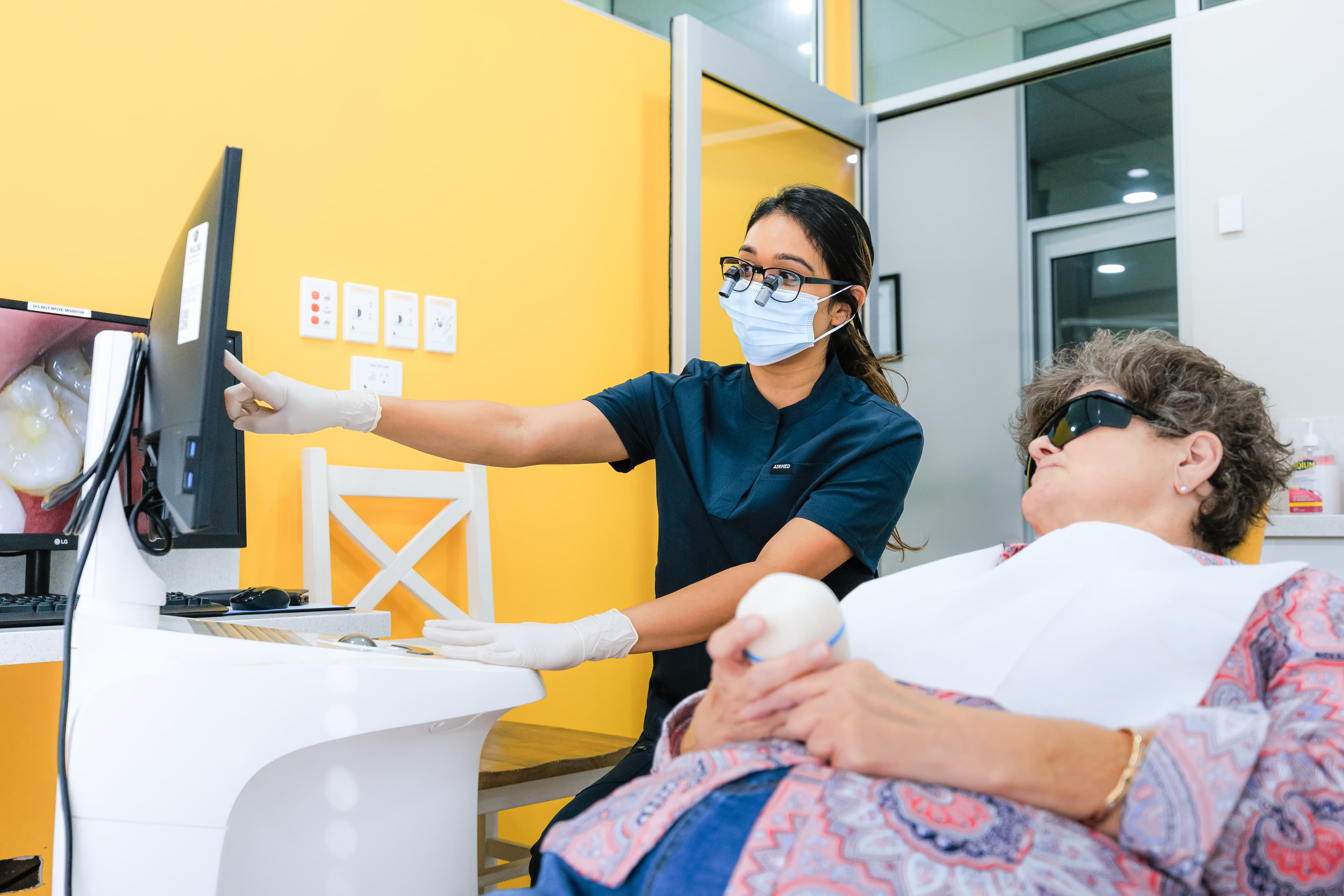
Tooth Extractions in Hilbert: Sometimes removing a tooth is the kindest thing we can do
Every extraction decision at Sienna Smiles is driven by clinical assessment — radiographic evaluation, periodontal status, and restorability — not a default option. According to the AIHW, Australians aged 15 and over have an average of 4.5 missing teeth, highlighting the prevalence of conditions that may necessitate extraction. When a tooth cannot be preserved, careful removal is the first step toward protecting the rest of your dentition.
A clinical decision, not a default
Extraction (exodontia) is considered when other treatment options — direct or indirect restorations, endodontic therapy, or periodontal treatment — have been assessed and are not clinically appropriate or viable for that tooth. The Australian Dental Association emphasises that tooth preservation is always the preferred clinical goal; extraction is recommended only when the prognosis for retention is poor.
Severe decay beyond restoration
When decay has destroyed so much tooth structure that a filling or crown cannot reliably restore function, extraction may be the appropriate clinical option.
Advanced periodontal bone loss
Significant loss of supporting bone due to periodontal disease can compromise a tooth's long-term prognosis. Your dentist will assess bone levels via X-ray before any recommendation is made.
Overcrowding — orthodontic preparation
Selective extraction of one or more teeth may be recommended by an orthodontist to create space as part of a planned orthodontic treatment.
Impacted teeth
Teeth that have not fully erupted — most commonly wisdom teeth — can cause pain, damage adjacent teeth, or create a site for infection. Surgical extraction is typically required. See our dedicated wisdom teeth removal page.
Infection or abscess unresponsive to treatment
Where a dental abscess cannot be adequately managed with antibiotics or root canal therapy, extraction removes the source of infection.
Fractured root
A tooth with a fractured root below the gum line is often unable to be restored and may require extraction to prevent ongoing infection.
Simple or surgical — what's the difference?
Both simple and surgical extractions are performed under local anaesthetic (typically lignocaine with adrenaline). The type required depends on the eruption status, structural integrity, root morphology, and anatomical position of the tooth, as assessed on periapical or panoramic radiography.
Simple Extraction
Used when a tooth is fully erupted above the gum line and accessible with forceps. Local anaesthetic is administered to the area, and the tooth is loosened and removed. The procedure typically takes 15–30 minutes.
- Tooth is fully visible and erupted
- Local anaesthetic administered
- Loosened with an elevator instrument, then removed with forceps
- Typically 15–30 minutes
- Gauze pressure applied post-extraction
Surgical Extraction
Required for teeth that are impacted, fractured below the gum line, or have complex root anatomy. A small incision is made in the gum tissue to access the tooth. Stitches may be placed and are typically reviewed at a follow-up appointment.
- Tooth is impacted, fractured, or has complex anatomy
- Local anaesthetic administered
- Small incision made in the gum
- Tooth may be sectioned for easier removal
- Stitches placed as clinically indicated
- Typically 30–60 minutes
Your dentist will assess your X-rays and tooth condition at your consultation and advise which type of extraction is appropriate.
Your extraction appointment
Understanding what happens at your appointment can reduce uncertainty and anxiety. HealthDirect Australia recommends that patients ask their dentist to explain each stage of the procedure before it begins. Here is a step-by-step overview of the extraction process at Sienna Smiles.
Assessment and X-ray
Your dentist reviews your dental history and takes a periapical X-ray of the tooth and surrounding bone. This confirms the root anatomy, bone levels, and proximity to adjacent structures before any treatment proceeds.
Local anaesthetic administered
Local anaesthetic is used to numb the tooth and surrounding gum tissue. This is used to minimise discomfort during the procedure. Most patients report feeling pressure and movement rather than discomfort once the area is adequately anaesthetised.
Extraction procedure
For a simple extraction, the tooth is loosened using a dental elevator and then removed with forceps. For a surgical extraction, a small incision is made and the tooth may be sectioned before removal. Your dentist will talk you through what is happening throughout.
Gauze pressure and haemostasis
Once the tooth is removed, a folded gauze pad is placed over the socket. You will be asked to bite down gently and hold firm pressure for 30–45 minutes to assist with clot formation and haemostasis.
Aftercare instructions provided
Before you leave, our team will provide written aftercare instructions covering eating, oral hygiene, activity restrictions, dry socket warning signs, and when to contact the practice. Any questions are welcome before you go.
Recovery after your extraction
Following your aftercare instructions carefully supports wound healing and reduces the risk of post-operative complications such as dry socket (alveolar osteitis). HealthDirect Australia emphasises that patient compliance with aftercare protocols is a significant factor in recovery outcomes. Individual recovery varies — the guidance below is general; your dentist will provide instructions specific to your procedure.
Bite on gauze
Bite firmly on the gauze pad for 30–45 minutes after the extraction. Maintain steady pressure — avoid checking the socket repeatedly.
Avoid rinsing or spitting for 24 hours
Do not rinse, spit forcefully, or use a straw for the first 24 hours. This protects the blood clot that forms in the socket, which is essential for normal healing.
Soft foods and cool drinks
Stick to soft foods — yoghurt, mashed potato, soup at room temperature — for the first 24–48 hours. Avoid hot, hard, or crunchy foods near the extraction site.
Avoid smoking
Do not smoke after an extraction. Smoking significantly increases the risk of dry socket and delays healing.
Ice pack for swelling
Apply an ice pack wrapped in a cloth to the outside of the jaw for 10–15 minutes on, 10–15 minutes off, during the first few hours. This can help manage swelling.
Oral hygiene
Continue brushing your other teeth normally. Avoid brushing directly over the extraction socket for the first 24 hours. From day two, gentle saltwater rinses (half a teaspoon of salt in a glass of warm water) may be recommended.
Recovery timeline
- Simple extraction: typically 1–3 days to return to normal activity. Individual recovery varies.
- Surgical extraction: typically 3–7 days, with some residual tenderness possible for up to two weeks. Individual recovery varies.
Dry socket — warning signs
Dry socket (alveolar osteitis) occurs when the blood clot in the extraction socket is dislodged or fails to form, exposing the underlying alveolar bone. According to HealthDirect Australia, dry socket occurs in approximately 2–5% of all dental extractions and is more common following lower wisdom tooth removal. Contact the practice promptly if you experience:
- Severe, throbbing pain that begins or worsens 2–4 days after the extraction
- An empty-looking or visibly open socket (the clot is absent)
- An unpleasant taste or smell from the extraction site
- Pain radiating to the ear or jaw on the same side
Dry socket is treatable. Contact Sienna Smiles on (08) 6276 8338 if you have these symptoms — do not wait for your next scheduled appointment.
Common questions about tooth extractions
Book an extraction assessment
If you have been advised that a tooth may need to be removed, or you are experiencing ongoing dental pain, book a consultation at Sienna Smiles. With proper clinical assessment including radiographic evaluation, our dentists will determine whether the tooth can be preserved or whether extraction is the appropriate course of action. All options, costs, and replacement alternatives are discussed in detail before any decision is made.